
Homeowner guide
Advantage ConcreteGetting a Walkway's Width, Slope and Edges Right
Three details decide how a walkway feels to use: how wide it is, how it slopes and how its edges meet the ground beside it. They're easy to overlook in planning and hard to change once the concrete is poured. Here's what to think about for each.
Width: plan for how the walk is used
A walk that feels narrow gets walked off. People step onto the lawn to pass each other, wheel bins along the edge of a planting bed or carry groceries one bag at a time. A walk that feels right lets the people and things that use it move comfortably.
Think about who uses it. A front walk might carry two people side by side, a stroller, a delivery cart or guests with bags. A side path might only see one person at a time with a bin. A garden path that's mostly for looking might be narrow on purpose. Each of those calls for a different width.
It helps to lay out the planned width with string or a garden hose and walk it, pushing a bin or carrying a bag. That shows quickly whether it's wide enough.
Width at the ends and the turns
Where a walk meets a door, a gate or a set of steps, a little extra width or a landing gives people somewhere to stand while they open the door or wait. At a turn, the inside corner gets cut, so a walk that turns sharply often needs to be wider at the bend or rounded off so people stay on the concrete.
Slope: getting water off the walk
A walk needs a slight slope so water runs off instead of pooling. There are two kinds of slope to think about. Running slope goes along the walk, from one end to the other. Cross slope goes from one edge to the other. On a flat site, a gentle cross slope often does most of the work, sending water off one side of the walk.
The water should leave the walk toward ground that can take it, such as a lawn or a planting bed, and never toward the house. If the walk runs alongside the house, the cross slope should fall away from the wall.
Slope: how steep is too steep
On a sloped lot, the running slope can get steep. A steep walk is tiring to climb and slippery to walk down when wet. At some point, steps or a combination of steps and gentler sloped sections become the better plan. A broom finish helps with grip on any sloped walk.
Why Every Step Should Be the Same Height covers what to get right if the walk includes steps.
Edges: where the walk meets the ground
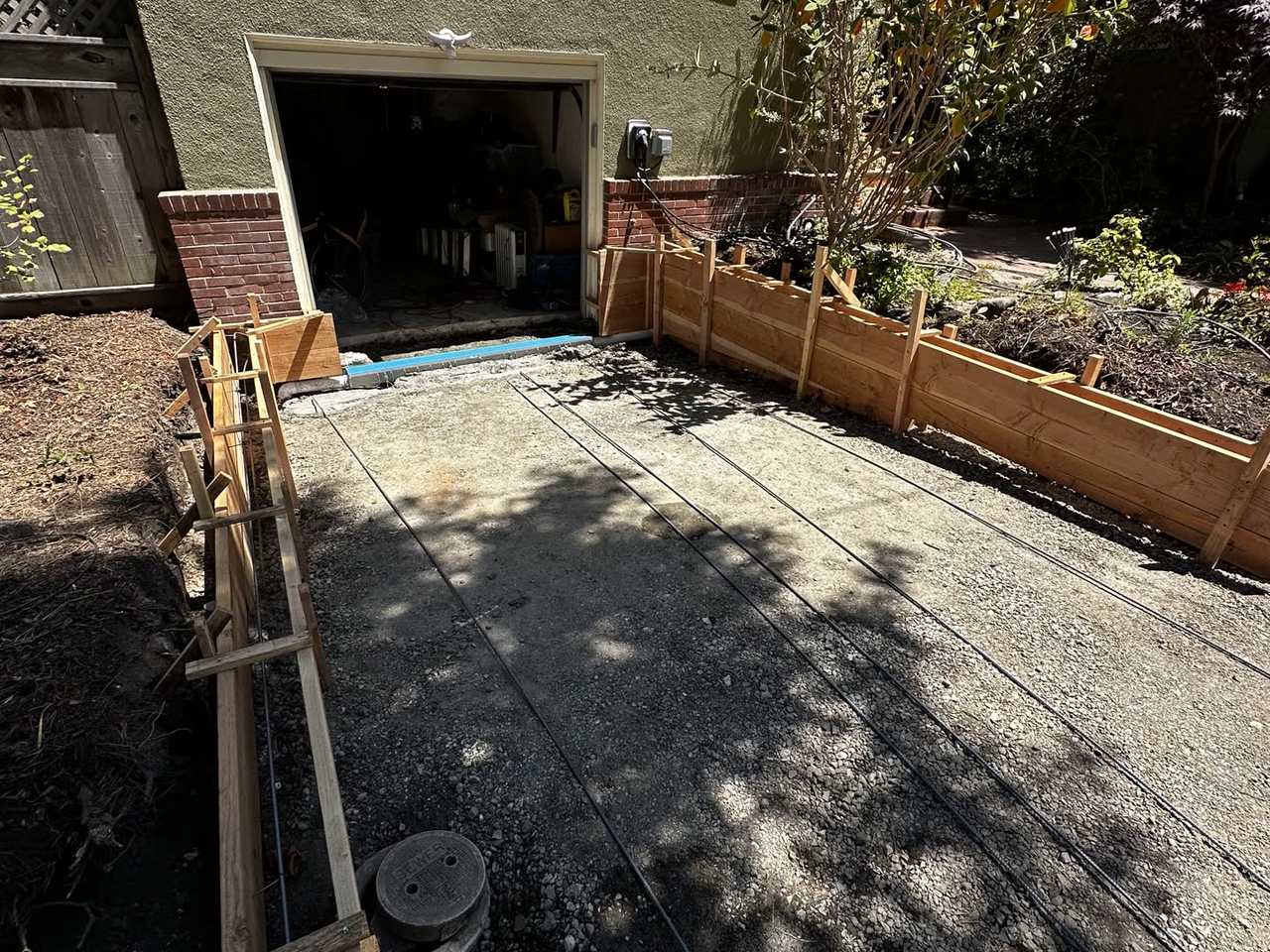
The edges of a walk are where it meets the lawn, planting beds, gravel or the house. A good edge sits at the right height relative to what's beside it. A walk that sits too high leaves a drop at the edge that catches feet and mower wheels. A walk that sits too low collects water and soil from the ground beside it.
Usually the walk sits just slightly above the ground beside it, so water runs off the concrete and onto the ground, not the other way around.
Edges: finished edges
Concrete edges are usually rounded slightly with an edging tool while the concrete is fresh. A rounded edge is less likely to chip than a sharp one and is kinder to feet and ankles. Along a planting bed, the edge also acts as a border that keeps mulch and soil off the walk.
Edges: where the walk meets other concrete
Where a walk meets a driveway, a sidewalk, a patio or a step, the two surfaces should meet at an even height. A lip at a joint is the classic trip edge. When the walk is replaced, these meeting points are planned so the new concrete lines up with what's already there. Making Steps, Landings and Walkways Meet Cleanly goes into this.
Joints
Walks have lines across them at intervals. Those are joints, and they give the concrete planned places to crack as it shrinks and moves. They're spaced along the walk to suit its width. Why Concrete Has Those Lines in It explains how they work.
A quick checklist
Before the forms go in, it's worth settling:
- The width along the main run, at the ends and at any turns
- Which way the walk slopes and where water goes
- Whether steps are needed on a steep run
- How high the walk sits relative to the ground beside it
- How it meets the driveway, sidewalk, patio or steps
- The finish
Getting started
When you tell me about a walkway job, a sketch of the route and a few photos of each end help the free estimate describe the width, slope and edges clearly. Concrete Walkways has more on how the work is done.
Services this guide relates to
Tell me about the job
The estimate is free, with no pressure and no obligation. Send the form and you'll hear back about your free estimate.
What happens next
- 1You send the form
- 2You hear back about the job
- 3You get a free estimate
- 4You decide
Request Your Free Estimate
Your details are used only to reply to your request. See the Privacy Policy.