
Homeowner guide
Advantage ConcreteMaking Steps, Landings and Walkways Meet Cleanly
Most trips around a house don't happen in the middle of a walk or a flight of steps. They happen where one surface meets another: the bottom step, the edge of a landing, the joint between a walk and a driveway. Here's where the trouble spots are, and how they're planned so each surface meets the next cleanly.
Why the meeting points matter
Each surface around a house is usually poured at a different time. The house and its front steps might be original, the walk replaced later, the driveway newer still. Each time, the new surface was set to its own level, and the ground under each settled in its own way. The result is often a small lip, a sudden drop or a step that's a different height from the others where two surfaces meet.
When new concrete is planned, those meeting points are where the most care goes.
Where a walk meets the bottom step
The bottom step sets the rhythm for the whole flight. If the walk at the bottom sits higher than it should, the first step is shorter than the rest. If it sits lower, the first step is taller. Either way, it's the step people trip on.
When steps are replaced, the walk at the bottom is checked too. Sometimes a section of walk is replaced along with the steps so the first step comes out the same height as the others. Why Every Step Should Be the Same Height explains why that matters.
Landings at the top
A landing gives people somewhere to stand at a door while they find keys, open a screen door or greet a visitor. It should be big enough for that, especially if the door swings outward. A landing that's too small leaves people standing on the top step while they open the door, which is awkward and unsafe.
The landing should also sit below the door threshold, with a slight slope that sends water away from the door. A landing that slopes toward the house sends rain straight to the threshold.
Landings partway up
On a long flight, a landing partway up gives people a place to rest and breaks the flight into shorter runs. It also lets the steps change direction if the site calls for it. Each section of steps above and below a landing should still have even steps.
Where a walk meets a driveway or sidewalk
A front walk often starts at the driveway or the public sidewalk. That joint needs to meet at an even height. A lip of any size here is a trip edge, and it's one of the most common places for one to develop as the two slabs settle differently over time.
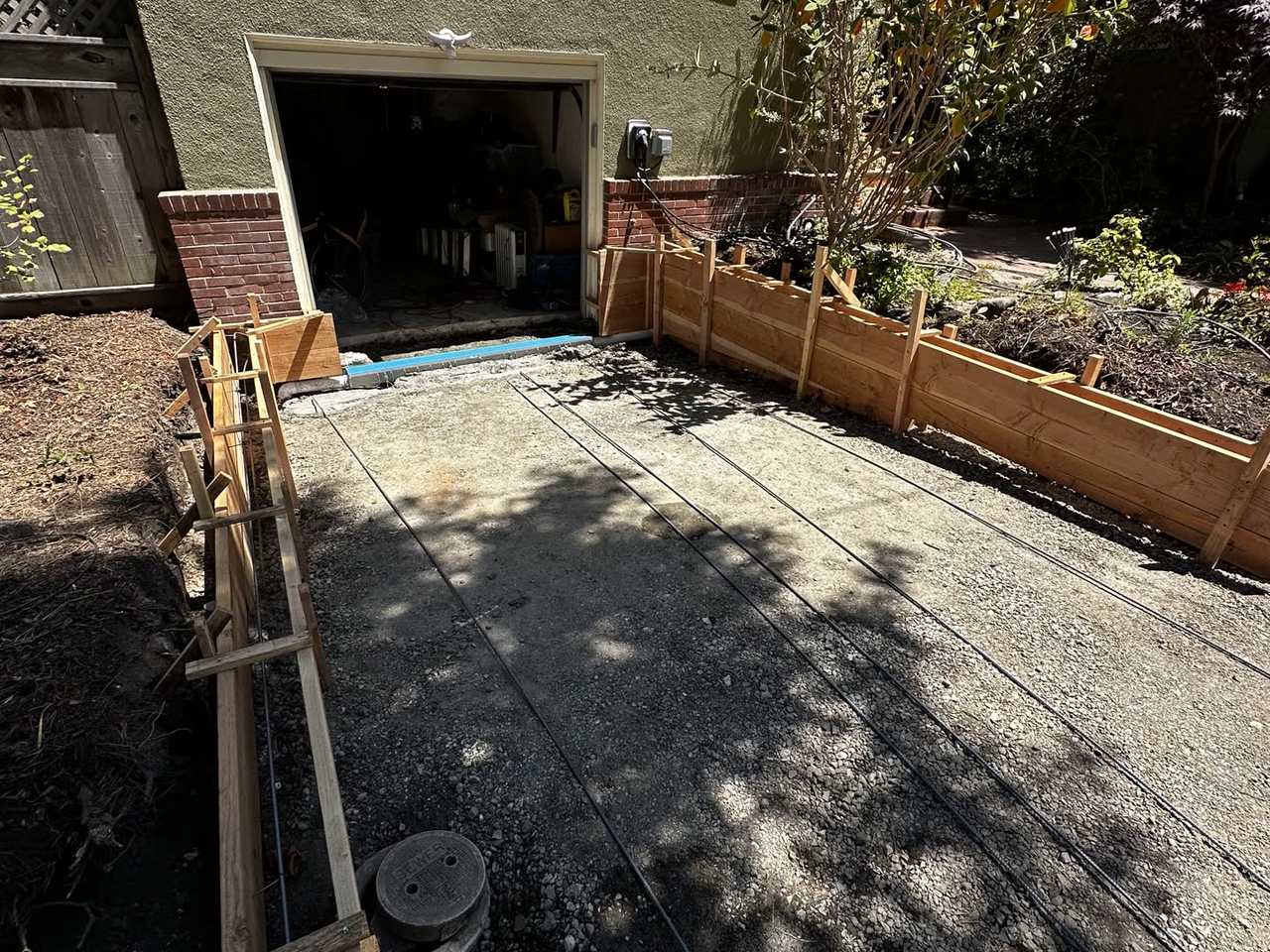
When a new walk is poured next to an older driveway or sidewalk, it's set to meet the existing edge evenly.
Where a patio meets the house or a step
At the back of a house, a patio might meet a back step, a door threshold or a deck. The same rules apply: the surfaces should meet at the right height, and water should flow away from the house, not toward it. How Patio Slope Keeps Water Away From the House covers that.
Water at the meeting points
Water collects where surfaces meet if the slopes don't work together. A walk that slopes toward the bottom step can leave a puddle right where people step. A landing that slopes toward the door can send rain under it. When the surfaces are planned together, their slopes are set so water keeps moving away from doors and steps.
Joints between old and new
Where new concrete meets old, a joint separates them. That joint lets each side move independently and gives a clean line where the two meet. New concrete won't match the old exactly in color, so the joint also gives the change a tidy edge.
A walk-around checklist
Walk around your own steps, landings and walks and look for:
- A first or last step that's a different height from the rest
- A landing that's too small to stand on while opening the door
- A lip where a walk meets a driveway or sidewalk
- Puddles at the bottom of steps or at a door
- Cracks or gaps where two surfaces meet
Planning it as one job
When steps, a landing and a walk all need attention, planning them together usually gives the best result. Each surface can be set to meet the next, slopes can be set to work together and the work can happen in one setup.
Getting started
Tell me about the job and include photos of each meeting point. The free estimate will describe how each surface is tied into the next. Concrete Stairs has more on steps and landings, and Concrete Walkways covers walks.
Services this guide relates to
Tell me about the job
The estimate is free, with no pressure and no obligation. Send the form and you'll hear back about your free estimate.
What happens next
- 1You send the form
- 2You hear back about the job
- 3You get a free estimate
- 4You decide
Request Your Free Estimate
Your details are used only to reply to your request. See the Privacy Policy.