Homeowner guide
Advantage ConcreteWhat a Driveway Approach Is, and Where It Meets the Street
Most homeowners have never had a reason to know the name for the strip of concrete where a driveway meets the street. Then a city notice mentions it, or the bottom of the driveway starts breaking up, and suddenly it matters. Here's what the approach is and why it takes such a beating.
Where the approach is
The driveway approach is the section that carries a car from the street up onto the property. On many homes it runs from the curb line, across the strip where the sidewalk crosses, to where the driveway proper begins. It's often sloped more than the rest of the driveway, because it has to climb from the low gutter line up to the level of the sidewalk and the property.
Exactly where the approach starts and stops depends on the street and the city. Some cities treat it as part of the public sidewalk area, with their own rules about how it's built. It's worth asking your city how it defines the approach in front of your home.
Why it wears faster than the rest of the driveway
The approach carries the full weight of every car that comes and goes, and it carries it at the point where the car is turning and changing angle. Wheels rolling up a slope push harder on the concrete than wheels rolling on flat ground. Cars turning in from the street also put sideways force on the edges.
It also sits at the lowest edge of the property, where water from the street and the driveway collects. Water working under the edges can soften the ground and let sections drop. Put those together and it's no surprise that the approach is often the first part of a driveway to crack and break.
Common problems at the approach
The usual signs that an approach is wearing out are:
- Broken corners and edges where cars turn in
- Cracks running across the slope
- Sections that have dropped below the street or the sidewalk
- A step or lip where the approach meets the driveway or the sidewalk
- Cars scraping at the bottom of the slope
How the approach meets the street
At the street end, the approach meets the gutter line. That transition is where water from the street flows past, so it needs to be shaped so water keeps moving along the gutter rather than pooling at the base of the driveway. At the property end, the approach meets the driveway or the sidewalk crossing, and the two surfaces need to meet at an even height so there's no lip for tires or feet.
Getting both ends right is the main thing that makes an approach work well. Why Cars Scrape at the Bottom of a Driveway, and How Slope Changes That explains how the angle at each end affects cars.
What replacing it involves
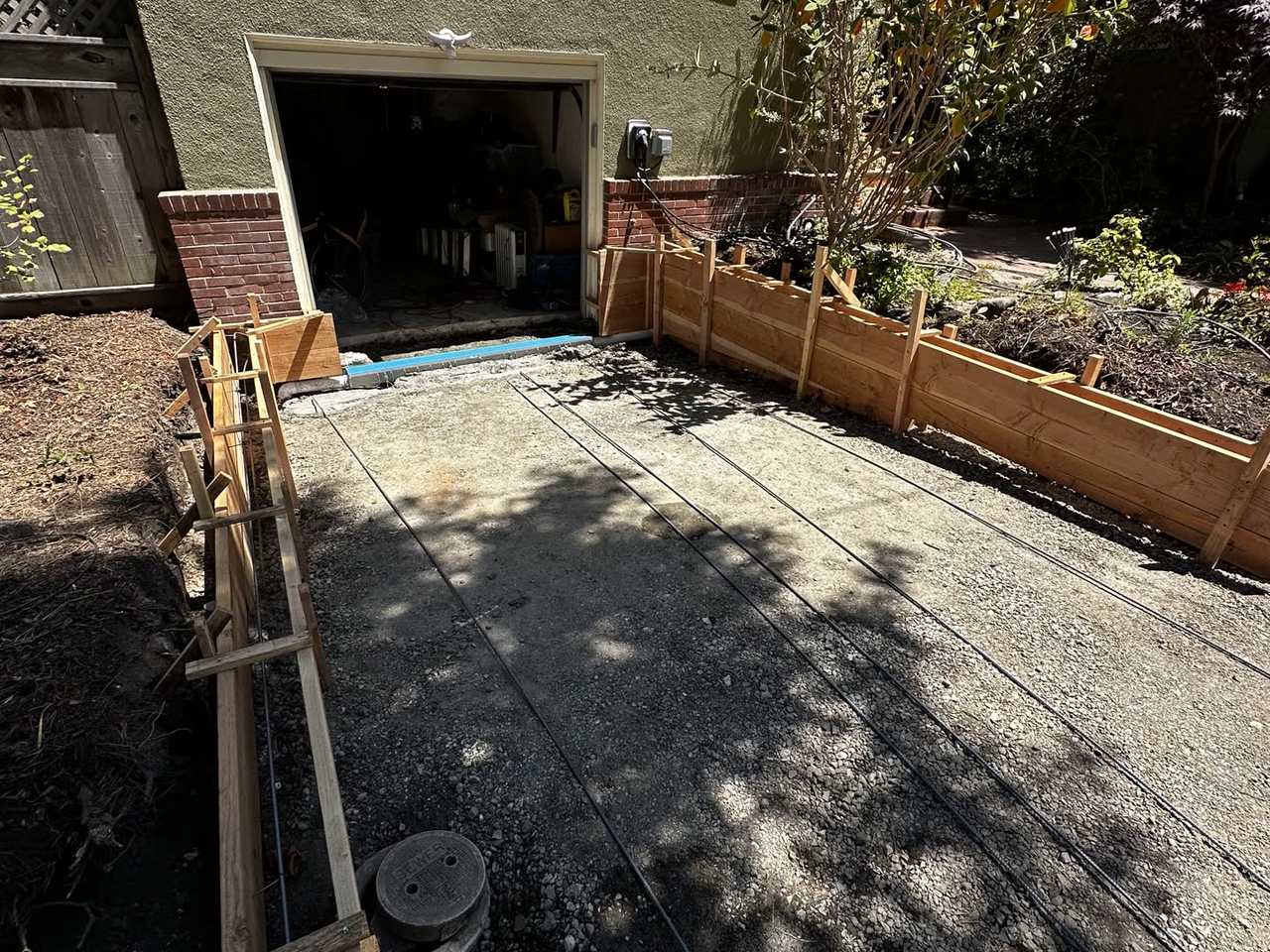
Replacing an approach means breaking out the old concrete, preparing and compacting the base, setting forms to the planned slope, pouring new concrete with joints and finishing it with a broom texture for grip. The new approach runs from the property edge to the curb line. What Comes Out and What Goes Back In When a Driveway Approach Is Replaced goes through each step.
While the new concrete cures, the driveway can't be used for cars. You'll be told when it's ready to drive on, so it's worth planning where to park in the meantime.
Who looks after the approach
Because the approach sits between private property and the street, people are often unsure whose job it is to keep it in repair. In many cities the property owner is responsible for the approach as well as the sidewalk in front of the home, but the rules vary, so your city is the place to ask. If a notice has arrived that mentions the approach, the notice itself is usually the clearest guide to what the city expects.
Whoever is responsible, the repair work is the same: the old approach comes out and a new one goes in, shaped to meet the street and the driveway cleanly.
Why it's often done alongside the sidewalk or driveway
Because the approach sits between the street, the sidewalk and the driveway, it often makes sense to look at all three together. If the sidewalk in front of the home needs work, or the driveway itself is breaking up, planning the front of the property as one job can mean one setup and surfaces that meet cleanly.
Getting started
If your approach is cracking, dropping or scraping cars, or a city notice mentions it, tell me about the job. Photos of the approach from the street and from the driveway help. Driveway Approaches covers the work in more detail, and the free estimate comes with no pressure and no obligation.
Services this guide relates to
Tell me about the job
The estimate is free, with no pressure and no obligation. Send the form and you'll hear back about your free estimate.
What happens next
- 1You send the form
- 2You hear back about the job
- 3You get a free estimate
- 4You decide
Request Your Free Estimate
Your details are used only to reply to your request. See the Privacy Policy.