Homeowner guide
Advantage ConcreteHow Water, Settling and Roots Move a Slab
Concrete rarely moves on its own. When a slab lifts, sinks, tilts or cracks, something underneath has usually changed. Three forces are behind most of it: water, settling ground and tree roots. Here's how each one works, what it looks like and what it means for replacing the slab.
Why the ground matters so much
A slab is strong when the ground under it supports it evenly. It's much weaker when it has to bridge a gap or ride over a bump. Any change in the ground under part of the slab puts it under stress, and that's when it moves or cracks. Almost every problem with a slab comes back to what the ground did.
Water: washing out the base
Water running under a slab can carry fine soil and base material away with it. Over time that leaves a hollow under the slab, and the slab settles into it. A downspout emptying beside a walk, a sprinkler aimed at the edge of a patio or a low spot that sends water under the edge of a driveway are all common causes.
Signs of washout include sections that have dropped near where water comes from, gaps under the edges of a slab, and soil or base material showing up on the surface after rain.
Water: soil that swells and shrinks
Many soils in the East Bay contain clay. Clay swells when it gets wet and shrinks when it dries out. Under a slab, that means the ground rises in the wet months and drops in the dry months, and not evenly. Over many seasons, that movement can lift one end of a slab more than the other, tilt panels and open cracks.
Signs of swelling soil include panels that move in different directions, cracks that open and close with the seasons, and slabs that have tilted without a tree nearby.
Settling ground
Ground settles when it wasn't compacted well before the slab was poured, or when loose fill was placed under part of it. Old trenches dug for pipes or utilities and backfilled loosely are a classic case. So is ground near a house that was disturbed during building. Over time the loose ground compresses under the weight of the slab, and the slab sinks with it.
Signs of settling include a single section or a strip that has dropped, often along a line that matches an old trench, or slabs near the house that slope toward it.
Tree roots
Roots grow toward the moisture that collects under concrete. As they thicken, they push up from below with steady force. The slab lifts, often tipping so one edge rises above the panel beside it. Roots are the most common cause of lifted sidewalk panels along a street.
Signs of roots include a raised panel close to a tree, a hump in the slab, and nearby panels starting to rise as well. Why Tree Roots Lift Sidewalk Panels covers roots in more detail.
Telling them apart
Often the location tells you which force is at work:
- Lifted near a tree: usually roots
- Dropped near a downspout, sprinkler or low spot: usually water washing out the base
- Dropped along a straight strip: often an old trench settling
- Tilted or cracked with no tree nearby, changing with the seasons: often swelling soil
- Sloping toward the house: often settling near the foundation, or water
What it means for a replacement
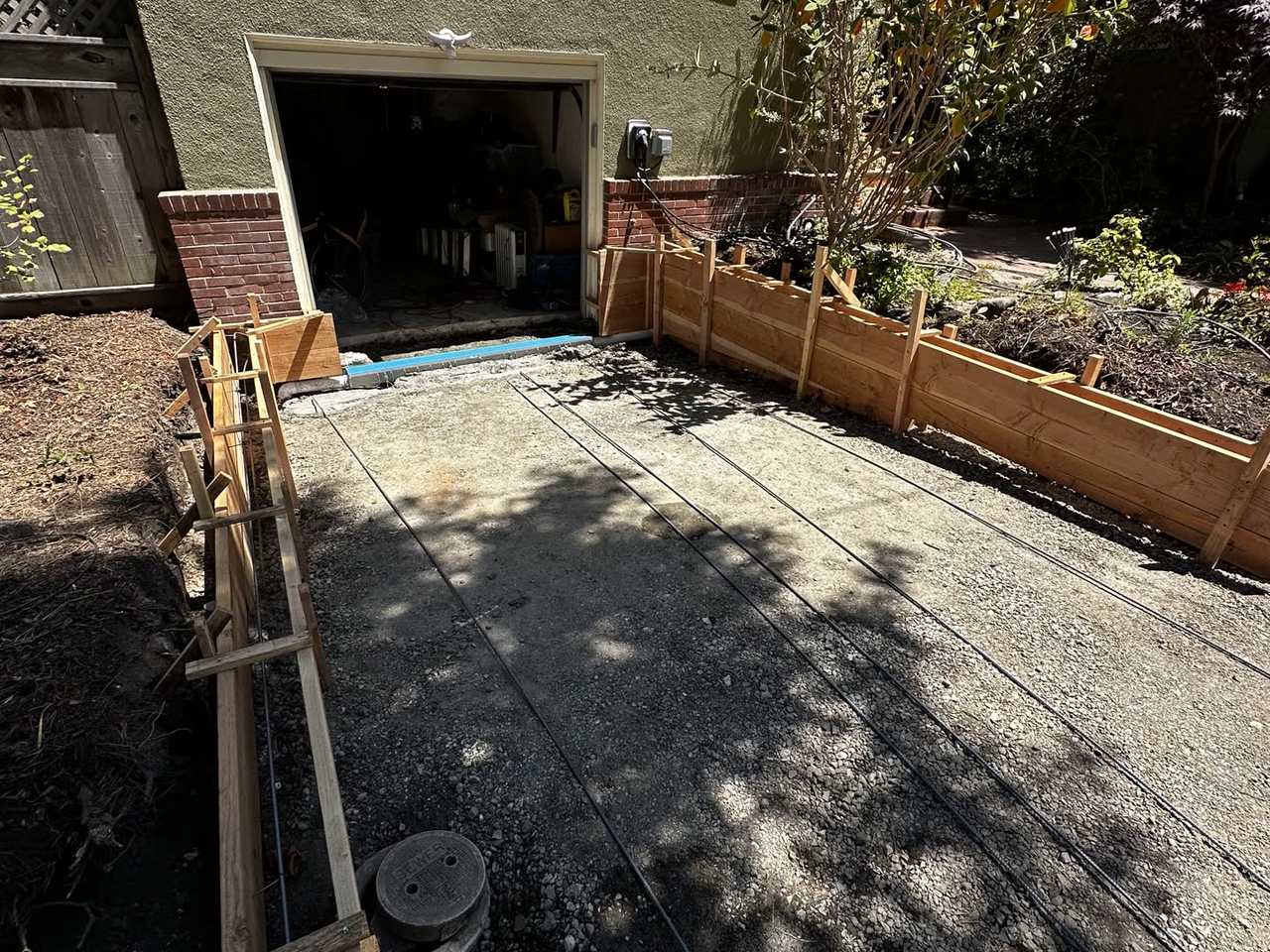
When a moved section is replaced, the old slab is broken out and the ground underneath is visible. That's the time to see what moved it. Soft or washed-out ground is dealt with and the base is prepared and compacted. If water was the cause, it helps to know where the water comes from, because a new slab will face the same water.
If a tree was the cause, mention it when you tell me about the job. Street trees often have their own rules set by the city, so it's worth checking with the city about the tree itself before any work near it.
What a new slab can and can't do
Good base preparation gives a new slab a firm, even start. It can't change the soil type, stop a tree from growing or redirect water that keeps arriving. That's why understanding the cause matters: a new slab sitting over the same problem will face the same forces.
All concrete moves to some degree. Joints and reinforcement control where cracks form, and fine shrinkage cracks can still appear in any slab.
Getting started
When you tell me about a job, mention what's near the moved section: trees, downspouts, sprinklers, slopes or any digging you know of. Those clues help plan the replacement. Concrete Problems, Explained puts these causes alongside other common problems.
Keep reading
- How Much Concrete Work Costs in Oakland, ExplainedEvery cost driver in plain language, and why quotes differ.
- Concrete vs. Pavers, ExplainedA side-by-side look for patios, walkways and driveways.
- Concrete Problems, ExplainedWhy concrete cracks, lifts and settles, and where it's the wrong choice.
- Concrete FAQStraight answers to the questions homeowners ask most.
Tell me about the job
The estimate is free, with no pressure and no obligation. Send the form and you'll hear back about your free estimate.
What happens next
- 1You send the form
- 2You hear back about the job
- 3You get a free estimate
- 4You decide
Request Your Free Estimate
Your details are used only to reply to your request. See the Privacy Policy.